
Articles of Interest
To view an article click the article name here:
Bombing of Compton Dundon 1940; Marshall’s Elm Skirmish 1642; Compton Dundon Rifle Range
Bombing of Compton Dundon 1940
This has been compiled from the recollections of residents at the time.
It was evening time, on Wednesday 9th October, 1940. The weather forecast for the Bristol and Plymouth areas showed South Westerly winds, force 8, with low cloud at around 1600 to 2000 feet and some rain and drizzle. The Battle of Britain has been waging for some months, with aerial battles being fought in the skies mainly over the East of the country.
Two days previously, the first concentrated air attack on a Somerset town had taken place, when 25 Junkers Ju88s and 50 Messerschmidt Bf110s had attacked Yeovil. 5 squadrons of fighters from No 10 Group, covering the South West of England, had shot down 7 Messerschmidts and one Junker bomber. The following day 44 High explosive bombs were dropped on the Western edge of Yeovil. A total of 27 people were killed and 32 injured in the two raids.
Meanwhile, on the top of Dundon Beacon was the body of an old green van. This had been dragged up by the Home Guard in order to provide some protection from the weather, though not from any bullets. This was the Observation post from which they looked out for invaders. It wasn’t continually manned, so it would be a matter of luck if the invasion came when there was someone in post to see it! Was it manned this evening? We do not know, but if it was, they were in for a bit of a shock.
In the village Hall, where the Village Hall trustees were concerned about how long the blackout materials would last, the WI were holding their annual meeting. As usual, it was well-attended by the ladies of the village. As they listened to their speaker and indulged in their various entertainments, were they even aware of what ensued that night at 9 o’clock? An air raid siren had sounded earlier, but as usual, it made little difference to the people of Compton Dundon – who was going to attack them?
There was the sound of a plane droning in the sky, and it got closer and closer. Fires lit up the sky near Redlands Farm caused by incendiary devices. All of a sudden there was a whistling sound, followed by four loud thuds, as something hit the ground, with sufficient force to shake the buildings nearby. The plane then flew away.
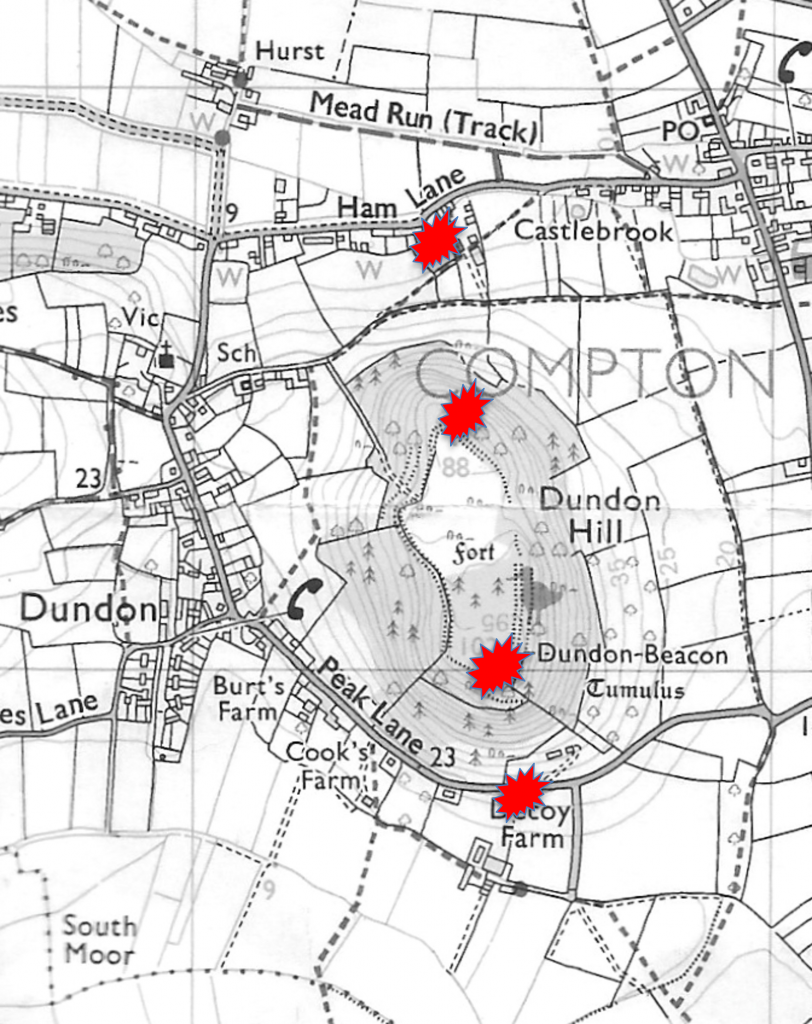
The following day a search was made, to find four bombs had been dropped in a straight line across the Beacon. The first had landed at the edge of a fir plantation about 100 yards up the Beacon from Peak Lane, a second was among the fir trees just over the top of the Beacon. A third bomb had landed near a spring halfway down the North side, and the final bomb had landed in Mr Stillwell’s pigsty at the back of The Nook on Ham Lane. Ham Lane was closed to the public, and an unexploded bomb squad arrived to dig for the bombs.
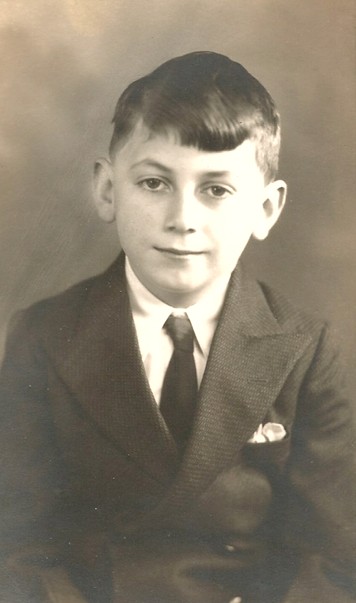
This is the description, as published in a later book of his memoirs, by 14 year old Cleveland Bartlett, who lived at Cow Farm on Ham lane and witnessed it all – and his adventures afterwards…
“Two days after my fourteenth birthday, I was playing in my bedroom with the old wireless set that Auntie Dora had given me for a present. My mother had gone up to the village hall to a WI meeting and my father was stood out in the garden listening to a plane flying around, the air raid alert siren had sounded earlier. At nine o’clock the sound of the plane got louder and then there was a whistling sound. I heard my father run down the path as there were four thuds that shook the house but there were no explosions. My father came in and told me that some bombs had dropped but none of them had gone off. He did not know where they had fallen but he was sure that they were not far away towards the Beacon. The plane flew off and my mother returned home later. She did not realise until the next day that on her way home she walked within about 20 yards of one of the bombs.
Unlike Ham Lane. Peak Lane was not closed and one afternoon as I cycled by I noticed a gap in the hedge that the bomb disposal squad had used to get to the bomb. I got off my bike and climbed through the hedge and saw a soldier standing by a large hole just below the trees. I walked to the hole and asked if I could have a look.
He said that I could so, I peered into the hole and about fifteen feet below sticking out from the bottom of the hole was the tail end of the bomb. It had four green fins and the body, about a foot in diameter, had green and yellow bands painted around it. I think it was a 500-kilogramme bomb* (*They were in fact 50kg bombs not 500) It was safe, the fuse had been removed. I thanked the soldier and left to collect my bike. Later that afternoon the bomb was detonated on the site and the explosion shook the whole village. Several of the stone lintels over the windows and doors at Cow Farm were cracked by the ground shock. The shock was even felt in Street. The other two bombs on the hill were also detonated on site.
II went later to see the huge craters that they had produced and to pick up pieces of shrapnel. There was still a strong acrid smell of explosive hanging around. The fourth bomb in Ham Lane was lifted out of the hole and placed on the back of a lorry. I saw it on the back of the lorry when it was taken to the bottom of Middle Drove, where it was detonated in the field on the left-hand side of the dirt drove. Being in soft ground it made a crater over twenty feet across and about six feet deep. Somehow I managed to get hold of a large piece of the TNT explosive that I kept for several years on a shelf in the barn. When ignited, it burnt slowly with an orange flame releasing a large amount of dense black smoke. I took a small piece along to school and gave it to Mr Low my chemistry master to see if he could find out what it was. At that time I did not know that TNT contained nitro-glycerine that could under certain conditions sweat (exude) and become unstable. Luckily I had burnt it all before this could happen.”
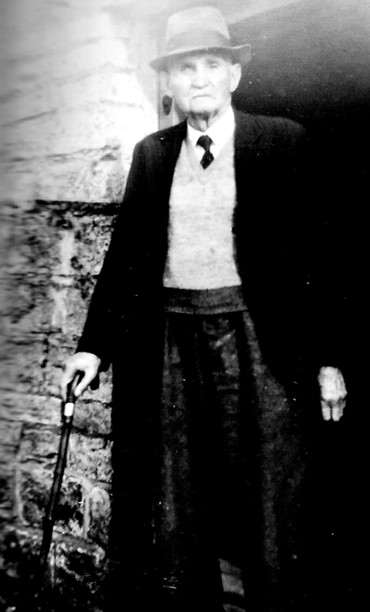
At a Parish Council meeting in November that year, James Stilwell asked the Council to fill in the bomb crater at his property – they replied that they couldn’t raise the manpower and that it was the duty of the Rural District Council. We don’t know when it was finally filled in.
Where the 4 bombs landed in Compton Dundon
Marshall’s Elm Skirmish, 1642
In 1642, Charles 1 and Parliament began to mobilise their supporters and to raise troops to form armies. Parliament passed a bill allowing it to take control of local militias and Trained Bands, which were local part-time militias. These generally were unwilling to fight outside of their own region. This is the story of a skirmish that arose at Marshall’s Elm as a result of the struggle to gather support together for both sides, and the clashes that arose. The Marquis of Hertford arrived in Wells, hoping to raise some Royalist supporters, and whilst the local Trained Band was persuaded to muster, they made it clear that they were not prepared to fight anyone. They managed to raise a force of 240 volunteers and formed three troops of horse.
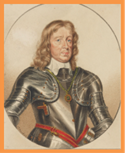
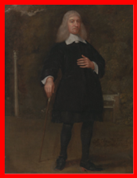
Meanwhile Sir Alexander Popham was having greater success in raising volunteers and Trained Bands on behalf of Parliament. He and Sir John Horner planned to hold a meeting at Shepton Mallet.
Sir Ralph Hopton, who was at Wells, heard about this and set off to Shepton Mallet to arrive early and prevent this meeting., and leaving his troops at the Town’s end, alighted at the High Cross and called the townspeople to discuss the situation.
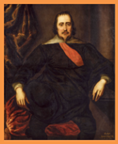

At this point William Strode arrived with a party of 10 well-armed soldiers and demanded that Hopton leave. However, Strode was outnumbered by the Royalist troops and was arrested, after a short struggle, and handed over to the local constable. A large number of Parliamentary supporters then began to enter the town, and the Royalists withdrew to the edge of the town, where they were reinforced by more soldiers. William Strode and the local constable, who was a Parliament supporter, escaped back to Street. Meanwhile about 1200 Parliament supporters gathered on the other side of the town, where they remained for some hours before the Royalist group received orders to withdraw back to Wells.
On 2nd August, the marquis was at Wells, where there were about 2000 Parliament supporters, mostly unarmed, horse and foot, assembling in the Mendip hills above Wells. He was in great need of support, and received news that regiments had been assembled in the West of the County so he sent Lieutenant Colonel Lunsford and some of their troops and volunteers, a force of 80 horse and dragoons, to Burrowbridge to accompany this force to Wells. Only 14 of these were dragoons. Having ridden through Glastonbury and Street, the group arrived at Marshall’s Elm where they saw a body of 600 foot drawn from Taunton and South Petherton, in a field two miles away, making their way towards Wells. Colonel Lunsford arranged his men amongst the trees on the hill to hide their true numbers. They captured a messenger, who had been sent from William Strode to the advancing band. He had been instructed to tell the Parliamentary group’s leader that there was a huge force at Wells that he was to join, and that there was only a small force in front of him, through which he could easily break. An hour later a second messenger was captured carrying the same message.
A parley, to discuss the situation, was held at an elm tree halfway between the two groups between Sir John Stawell and John Pyne, but they could not agree to step back to avoid conflict. The route to the top of the hill at Marshall’s Elm was via a deep hollow way. While he was parleying, Stawell had told his commanders to divide his horse into three groups, making his group clearly visible in the middle of the hollow way, with the other two groups on either side, partially concealed to hide their numbers. The 14 dragoons were split into two groups either side of the hollow way, hiding in quarry pits, some 150 paces ahead of the horse.
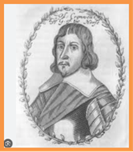
The Parliament supporters were lead from the front by Joseph Osmond (described in a report as a violent grand jury man), while their leader, Pyne brought up the rear. They advanced, led by Osmond, and when they got within musket range gave a volley. The Royalists waited until the force was 120 paces from them when the order was given to the dragoons to open fire. At the third volley, Joseph Osmond was shot in the head, and several others were wounded, and the advance faltered. At that moment, the Royalist cavalry charged and routed the Parliamentarians, capturing their Captains Sands and Preston. Many hid in the cornfields to escape, and some of the Royalists continued the chase as far as Somerton, where they left prisoners and horses before returning to Wells. Seven Parliamentary supporters were killed during the skirmish, and a further 18 died later from their wounds. John Pyne escaped and 60 horses were captured and taken to Wells. However, the next day with 2000 Parliamentary supporters gathering outside Wells, the Marquis of Hertford retreated to Sherborne. From Tudor Cottage the sounds of ghostly riders passing at night have been heard. Could these be ghosts from the skirmish?
A fuller description of these events were given in a Presidential address by W S Clark to the Glastonbury Antiquarian Society on January 7th 1904.
Rifle Range
By 1872 the headquarters of the 25th Somerset Volunteer Rifle Corps was based in the village with a commander and a drill sergeant.
Rifle volunteers were formed at a time when Britain was alarmed by the growing threat of Napoleon III’s France. These Rifle Volunteer regiments often adopted muted uniform colours such as dark green or grey in the style of the major Rifle Corps. Following the Childers Reforms of 1881, these Rifle Volunteers became formally attached to line regiments as numbered volunteer battalions. As a result, the original Somerset Rifle Volunteer Corps (formed in 1859) became the 2nd and 3rd Battalions Somersetshire Light Infantry in 1881. They kept their grey uniform for some years after, rather than adopt the scarlet, marking them as distinctly different.
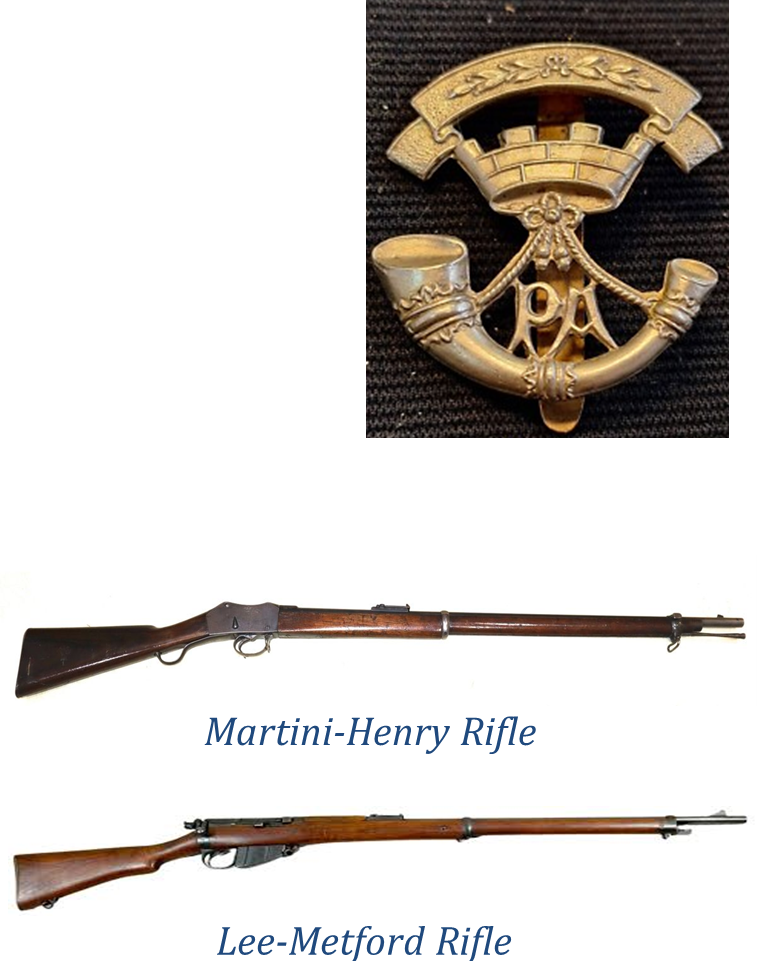
In 1895 G Company (Somerton) of the 3rd Volunteer Battalion Prince Albert’s Somerset Light Infantry was holding Squadron drills once a week in Compton Dundon. The Captain Commanding was Frederick W. Pinney.
There was a firing range marked on the Ordnance Survey map of 1885 running from Hatch Hill to Combe Hill, where the targets were marked on the map.
In 1882 the militia used the Martini-Henry rifle, which had an effective range of 400 yards with a maximum range of 1900 yards.
This was replaced in 1895 with the Lee-Metford rifle with an effective range of 800 yards.
It is not clear when this firing range ceased being used.
During the Second World War, the Home Guard groups used this range for practice. There was also an Auxiliary (Home Guard) Unit, trained for sabotage activities in the event of invasion, with an underground Operational Base in Butleigh Woods nearby. It is probable that they practised on the range. Women also practised rifle shooting under the direction of Jack Steadman, who lived at Tudor House, on Compton Street. In the run up to the D-Day landings in 1944, local people tell of troop convoys, particularly of locally based American soldiers, queueing to take their turn on the firing range and to practise demolitions. There was also a second firing range at Hurcott, between Littleton and Somerton.
Newspaper articles re Rifle Range
(copyright British Newspaper Archive)
SOMERSET ROYAL HORSE ARTILLERY ORDERS BY MAJOR E R PHILLIPS OFFICER COMMANDING For week commencing Sept 13 1912 Saturday Musketry practice Compton Dundon Range commencing at 2 pm (Central Somerset Gazette September 1912)
SOMERSET R.H.A. RIFLE CLUB
FIRST SHOOT. The first shoot of the recently formed rifle club in connection with the local company of the Somerset Royal Horse Artillery, was held at Compton Dundon on Saturday. A good number competed, and, considering this is the first year of the club’s existence, some very creditable marksmanship was recorded. The competition resulted as follows: First prize (silver cup. given by Lieut. R. Bath, R.H.A.)— Bombardier S. A. Haimes, Glastonbury; 2nd prize (set of military hair brushes in case, given by Mr. F. J. Gilbert. of Glastonbury)—Gunner Barnes, Street; 3rd prize (gold tie pin, given by the club)—Gunner Hall, Street. Recruits’ prize (match-box) – Gunner T. Carr. It is intended that the shoot shall be an annual event. The following are the scores of the first three in each competition. Five shots at each range.
200 300 500 Total
Bom. Holmes 13 14 18 45
Gunner Barnes 19 9 4 32
Gunner Hull 10 8 12 30
RECRUITS.
100 200 300 Total.
Gunner Carr 10 13 16 39
Gunner G. Chick 20 15 2 37
Gunner Lazenbury 10 20 6 36
(Central Somerset Gazette October 1913)
SOMERSET R.H.A. ORDERS.
Rifle Practice —There will be a rifle practice on Saturday next. 27th June, at Compton Dundon Range. Firing to commence at 2.30 p.m. Shooting Match. — A shooting match has been arranged with the West Somerset Yeomanry to take place on Saturday, July 4th, at Compton Range. Names of N.C.O.s and men representing the team will be notified later. Recruits — There are vacancies in the Battery for suitable young men of good character between the ages of 17 and 35. Those desirous of joining should apply to Sergt-Major Hunt or to any member of the Battery. (Signed) R. BATH. Lieutenant Som. Battery R H.A. (Central Somerset Gazette June 1914)
SOMERSET R.H.A. ORDERS. For the week commencing July 4th. There will be a Shooting Match on Saturday next. July 4th. with the West Somerset Yeomanry at Compton Range at 2.30 p.m sharp. The team to represent the Sub-section will be: Lieut. R. Bath. Sergt.-Major Hunt. Corpl. S. A. Haimes, Gunner Barnes. Gunner Hull and. Driver Pompey. (Central Somerset Gazette July 1914)
The Somerset R H A had an HQ at Taunton with a section at Glastonbury. Not long after these newspaper reports, the West Somerset yeomanry were being mobilised for the Front.
References:
www.suburbanmilitarism.wordpress.com